Download File
Please provide your contact information below to proceed with the download. We only use this to enhance your experience and offer relevant updates.

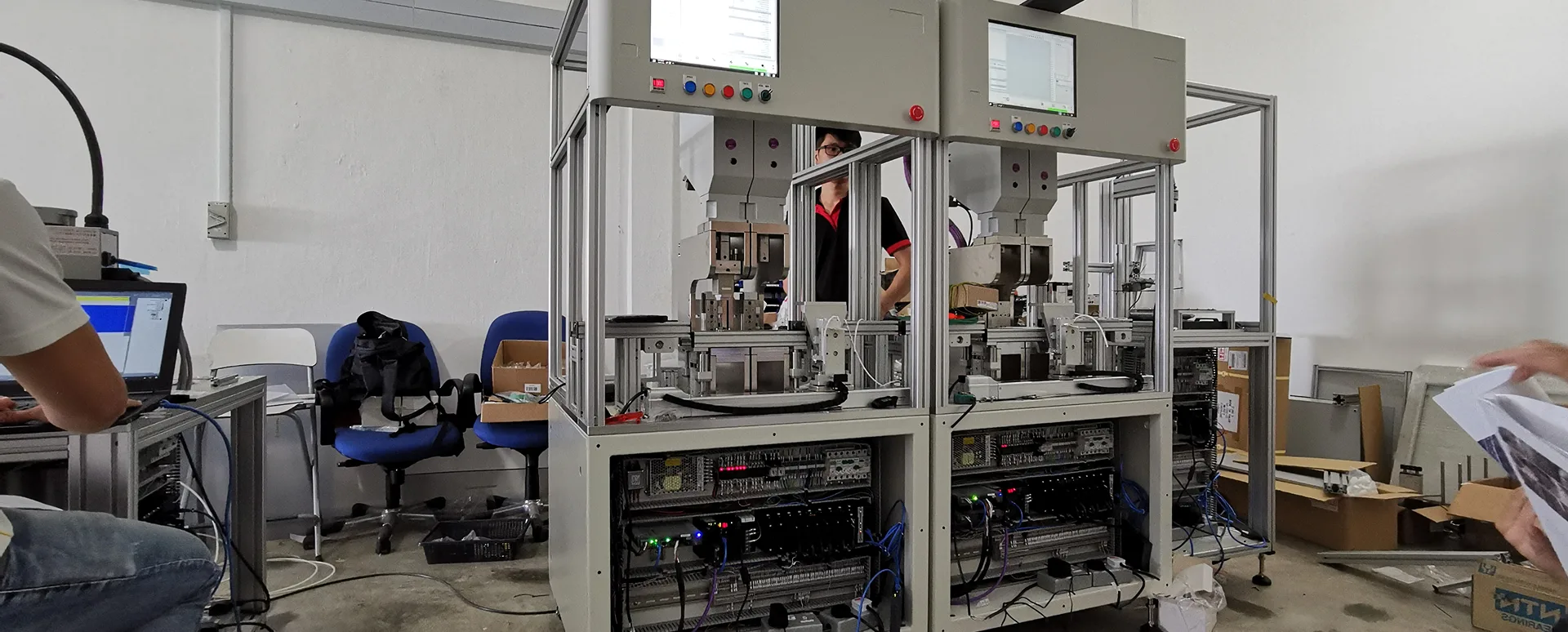
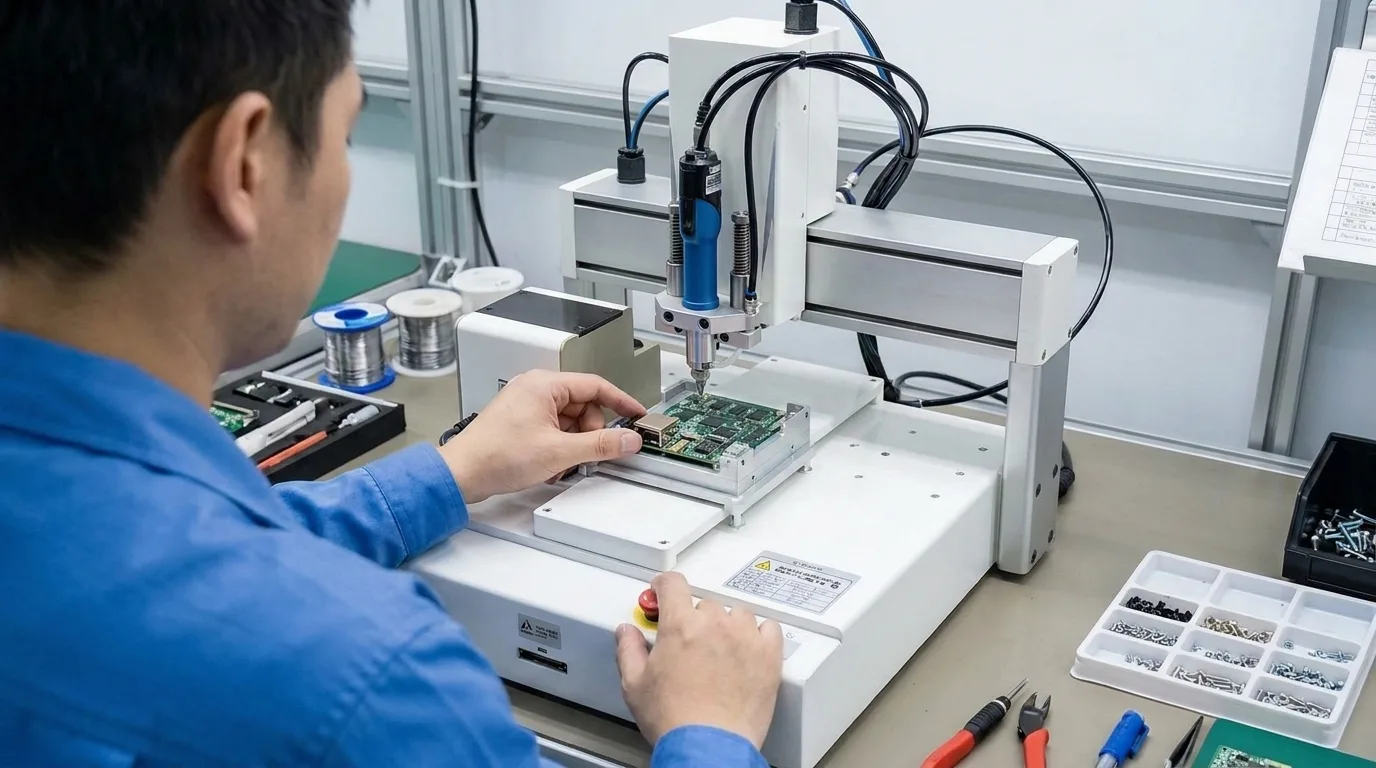
As Malaysia continues to strengthen its position as a global electronics manufacturing hub, production facilities face increasing pressure to improve productivity while maintaining exceptional product quality. Manufacturers are expected to deliver higher output, minimize defects, and reduce operating costs, all without compromising precision.
One technology that has become increasingly valuable in achieving these objectives is the Automatic Screw Feeder Malaysia solution. Automatic screw feeding systems significantly improve production speed, consistency, and workplace safety, by automating one of the most repetitive assembly tasks
For electronics manufacturers, where thousands of screws may be installed every day, manual fastening can create production bottlenecks, inconsistent torque, operator fatigue, and unnecessary downtime.
An automatic screw feeder addresses these challenges by ensuring screws are supplied quickly, accurately, and continuously to the fastening tool.
An automatic screw feeder is an industrial automation system that automatically sorts, presents, and delivers screws directly to an operator or automated screwdriver. Instead of manually picking up each screw, operators receive the next fastener instantly, allowing continuous fastening with minimal interruption.
A complete system typically consists of:
These components work together to ensure every screw is delivered in the correct orientation, reducing human handling and improving fastening consistency throughout the production process.
This technology is widely adopted across Malaysia’s electronics manufacturing industry because many products require dozens of precisely tightened screws during assembly.
Although manual screw fastening appears simple, it often becomes one of the largest hidden sources of production inefficiency.
Common challenges include:
Operators spend valuable production time picking up screws instead of performing actual fastening. Across thousands of products, these extra seconds accumulate into significant production losses.
Different operators apply different fastening force. This inconsistency may lead to loose screws, damaged threads, or excessive tightening that affects product reliability.
Dropped screws, incorrect screw selection, or improper positioning increase assembly errors and product rework.
Repetitive hand movements contribute to muscle strain and fatigue, reducing productivity over long production shifts.
When operators constantly refill screw trays or retrieve dropped screws, assembly flow becomes inconsistent and production targets become harder to achieve.
These challenges become even more significant in high-volume electronics production where precision and repeatability are essential.
An automatic screw feeder eliminates the need for manual screw picking.
Each screw is automatically delivered to the fastening point, allowing operators to immediately proceed to the next fastening task.
The result includes:
For manufacturers producing thousands of electronic products daily, even a one-second reduction per fastening operation can generate substantial productivity gains over time.
Consistent screw presentation ensures every screw is positioned correctly before fastening begins.
This reduces:
Greater fastening accuracy leads to improved product quality and fewer warranty issues.
When combined with torque-controlled electric screwdrivers, automatic screw feeders help ensure every fastener meets predefined tightening specifications.
Benefits include:
Consistency is particularly important for electronics products where improper fastening may affect internal components or product lifespan.
Rather than replacing operators, automation enables employees to focus on higher-value production activities.
Automatic screw feeding reduces unnecessary manual handling, allowing operators to assemble more products within the same working hours.
Manufacturers benefit from:
Manual handling often results in:
Automatic feeding systems precisely control screw delivery, reducing waste while improving inventory management.
Although individual screws are inexpensive, accumulated losses over millions of fastening operations can become significant.
Repetitive motion injuries remain a concern in many manufacturing environments.
Automatic screw feeders reduce repetitive hand movements by eliminating constant screw picking and positioning.
This creates:
A more ergonomic workstation also supports higher productivity throughout long production shifts.
Many Malaysian factories are moving toward Industry 4.0 and smart manufacturing initiatives.
Modern automatic screw feeder systems can integrate with:
This integration provides better process control, traceability, and real-time production data for continuous improvement.
Malaysia has become one of Southeast Asia’s leading electronics manufacturing destinations.
Products commonly assembled include:
These products often require numerous precision fastening operations.
Automatic Screw Feeder Malaysia solutions help manufacturers achieve:
As production volumes continue to increase, automation becomes an important investment rather than an optional upgrade.
Not every production line has identical requirements.
Before selecting an automatic screw feeder, manufacturers should evaluate several important factors.
Different screw sizes, lengths, head types, and materials require compatible feeding mechanisms.
High-volume production may require fully automated feeding systems, while lower-volume operations may benefit from semi-automatic solutions.
Assembly complexity influences nozzle selection, screw delivery methods, and workstation configuration.
Manufacturers should consider compatibility with existing electric screwdrivers, robotic systems, conveyors, and production software.
Reliable after-sales service, installation assistance, maintenance, and operator training help maximize long-term system performance.
Working with an experienced automation provider ensures the selected solution matches current production needs while supporting future expansion.
Implementing industrial automation requires more than purchasing equipment. It requires practical engineering knowledge and ongoing technical support.
Preston supports manufacturers by providing:
With experience in industrial automation, Preston helps manufacturers improve fastening efficiency while ensuring smooth integration into existing production environments.
Whether upgrading a manual assembly workstation or expanding a fully automated production line, choosing the right automation partner can significantly improve long-term operational performance.
As manufacturing becomes increasingly competitive, improving efficiency is no longer limited to major production equipment. Small process improvements such as automating screw feeding can deliver measurable gains in productivity, quality, and operational consistency.
An Automatic Screw Feeder Malaysia solution helps manufacturers reduce assembly time, improve fastening accuracy, minimize defects, and support smarter production processes. For electronics manufacturers seeking higher output with consistent quality, investing in automatic screw feeding technology provides both immediate operational benefits and long-term competitive advantages.
Looking for the right Automatic Screw Feeder Malaysia solution for your production line? Contact Preston for professional consultation tailored to your manufacturing needs. You can also visit our website to explore our full range of industrial automation products and solutions.
An automatic screw feeder is a system that automatically sorts and delivers screws to a screwdriver or fastening point. It reduces manual handling, speeds up assembly, and improves fastening accuracy.
An automatic screw feeder streamlines the fastening process by supplying screws continuously to the operator or automated screwdriver. It reducing assembly time, minimizing fastening errors, improving torque consistency, and increasing overall productivity.
Automatic screw feeders are ideal for industries that require fast, repetitive, and precise screw fastening. They are commonly used in:
Yes. Automatic screw feeders are widely used in electronics manufacturing because they provide precise, repeatable fastening while reducing assembly time. They help manufacturers improve product quality, minimize defects, and increase production efficiency, making them an excellent solution for high-volume electronic assembly lines.
For manufacturers with repetitive fastening operations, an automatic screw feeder is a worthwhile investment. It helps increase productivity, improve product quality, reduce labor-intensive work, and lower long-term operating costs, providing a strong return on investment
